Self storage auctions in the US are how storage facilities sell the contents of abandoned units when tenants stop paying rent. They’re open to the public, fast‑paced, and can be a way to score deals or even start a side hustle — if you know exactly how they work.In this guide, you’ll learn the step‑by‑step process, the rules in different states, what to expect at your first auction, and how to avoid common mistakes.
Why Storage Units Go to Auction
Storage facilities rent out units on a month‑to‑month basis. When a tenant stops paying rent and doesn’t respond to notices, the facility can’t just throw everything away.
Instead, state law lets them:
- Place a lien on the unit’s contents for unpaid rent, late fees, and storage costs.
- Sell the contents at a public auction to recover those costs.
- Keep any extra money after paying off the debt (in most states).
This process protects the facility’s income and clears out units so they can be rented again.
How Long Before a Unit Is Auctioned?
The timeline varies by state, but most units go to auction 30–90 days after the first missed payment. Here’s the typical flow:
- Missed payment – Rent is late, and the tenant doesn’t pay or respond.
- Default notice – The facility sends a formal notice of delinquency, often by mail or email.
- Grace period – The tenant usually has 5–10 days to pay and keep the unit.
- Lien notice – If the debt isn’t settled, the facility files a lien and schedules an auction.
State laws set minimum waiting periods before the sale, like:
- 14–15 days in states like California, Texas, and North Carolina.
- 30 days in states like Florida, New York, and Illinois.
- 45–60 days in states like Arkansas, Ohio, and Oregon.
After that, the auction is advertised and held on a set date.
How Self Storage Auctions in US Are Advertised
Storage facilities must follow state rules to notify the public about upcoming auctions. Common methods include:
- Online listings – On the facility’s website, auction platforms (like StorageTreasures), or classified sites.
- Local newspapers – Many states require ads in a local paper a few days before the auction.
- On‑site signs – Posted at the facility with the unit number, date, time, and rules.
A typical auction listing includes:
- Unit number and size (e.g., 10×10, 10×20).
- Date, time, and location (in‑person or online).
- Any special rules (cash only, ID required, cleanup deadline).
What Happens at the Auction
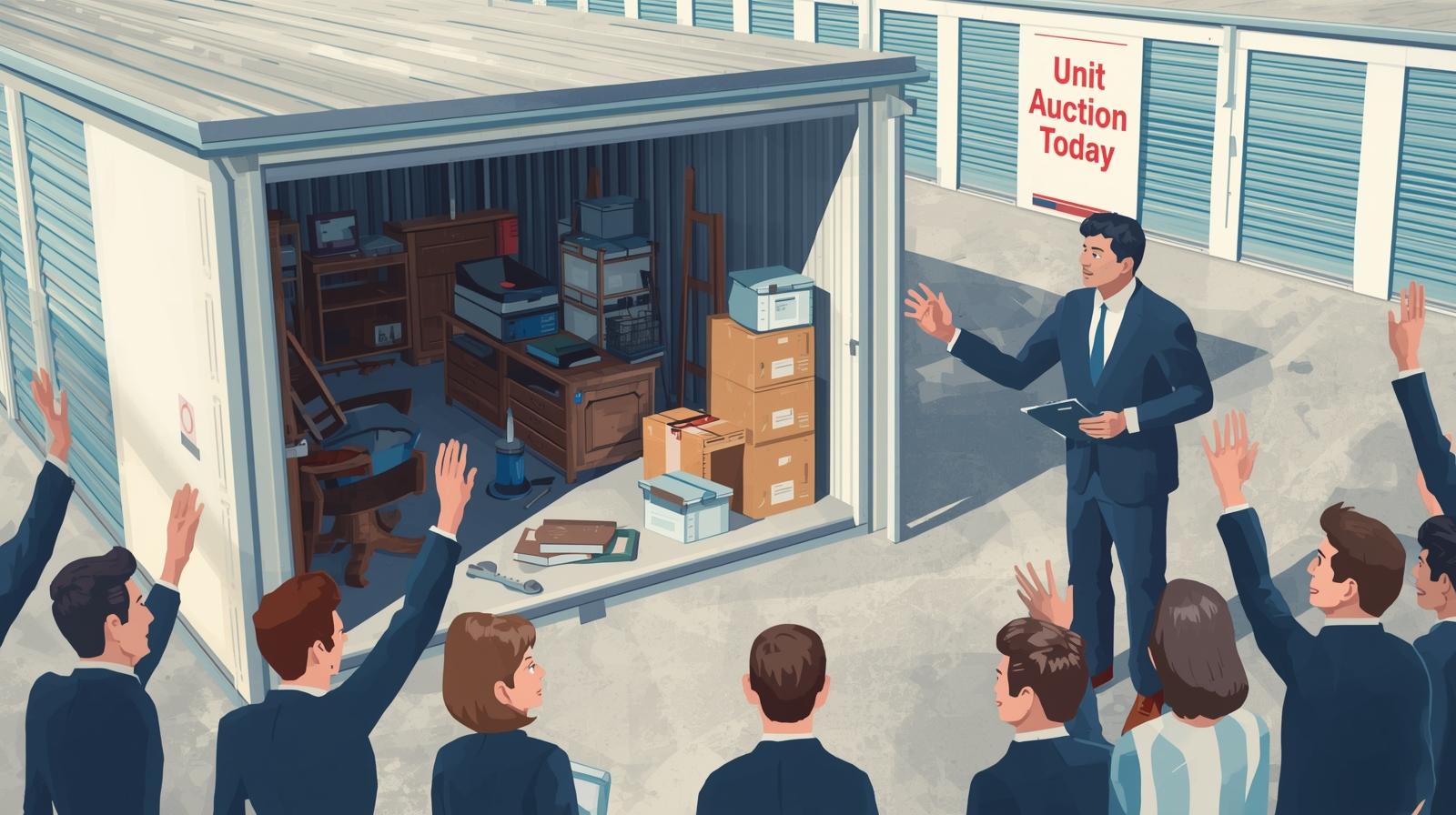
Most self storage auctions in US are held on‑site at the facility, though online auctions are growing fast. Here’s what to expect:
Registration
Before bidding, you must:
- Be at least 18 years old.
- Show a valid photo ID (driver’s license, state ID, or passport).
- Sometimes pay a refundable deposit or sign a bidder agreement.
Facilities do this to track who’s bidding and enforce their rules.
Preview (The “Look, Don’t Touch” Rule)
Before the auction starts, bidders get a short preview of the unit. You can:
- Stand in the doorway and look inside.
- See how full the unit is and what kinds of items are visible.
But you cannot:
- Step inside the unit.
- Move boxes, open containers, or touch anything.
This “as‑is, where‑is” rule protects the facility and keeps the auction fair.
Bidding
The auctioneer starts the bidding, usually with a low opening bid. Bidding is:
- Fast and competitive, with bids increasing in set increments.
- Done by raising a hand, nodding, or using an online bidding platform.
- For the entire unit, not individual items.
The highest bidder wins the whole unit and everything inside it.
Payment and Cleanup Rules
Winning a unit is just the first step — you must act quickly to keep it.
Paying for the Unit
Most facilities require:
- Immediate payment after the auction ends.
- Cash, cashier’s check, or sometimes a credit card (check the facility’s rules).
- A buyer’s premium (often 10–15% of the winning bid) and sales tax, if applicable.
If you can’t pay right away, you usually lose the unit, and the next highest bidder gets it.
Cleaning Out the Unit
After paying, you get a short window to remove everything. Typical cleanup rules:
- 24–72 hours to empty the unit completely.
- The unit must be swept clean and returned in good condition.
- Late or incomplete cleanup can result in fines or being banned from future auctions.
You’re responsible for:
- Hauling away all items (keep, donate, or resell them).
- Disposing of trash properly (many facilities charge extra for junk removal).
Risks and Rules for Buyers
Self storage auctions in US can be exciting, but they come with real risks. Here’s what every bidder should know:
“As‑Is” Sales
Units are sold “as‑is,” meaning:
- No guarantees about what’s inside or its condition.
- No refunds or returns if the unit is mostly junk or damaged.
- You accept all risks, including hazardous materials or illegal items (though facilities usually remove those).
Common Pitfalls
- Overbidding – Getting caught up in the moment and paying more than the unit is worth.
- Hidden junk – Units that look full may contain mostly trash, broken furniture, or worthless items.
- Cleanup costs – Hauling, disposal, and storage of items can eat into profits.
Legal and Safety Rules
- You must follow the facility’s rules (ID, payment method, cleanup time).
- You cannot keep items that belong to the original tenant (like mail, IDs, or medical records) — these must be returned or destroyed.
- In some states, excess proceeds from the sale must be held or returned to the tenant.
Tips for Success at Self Storage Auctions in US
If you want to make money or find good deals, follow these practical tips:
- Research the facility – Visit a few auctions first to learn their rules and typical unit quality.
- Set a budget – Decide your max bid before the auction and stick to it.
- Look for clues – Full units, business supplies, tools, or sports gear often have more resale value.
- Bring help and equipment – A truck, dolly, and helpers make cleanup faster and cheaper.
- Check local laws – Some states have extra rules about liens, notices, and buyer rights.
Final Thoughts
Self storage auctions in US are a legal way for facilities to recover unpaid rent by selling abandoned unit contents. They’re open to anyone 18+, but they require quick decisions, cash on hand, and a willingness to take risks.By understanding the process — from missed payments to bidding, payment, and cleanup — you can participate safely and maybe even walk away with a great find.