Physical Address
304 North Cardinal St.
Dorchester Center, MA 02124
Physical Address
304 North Cardinal St.
Dorchester Center, MA 02124

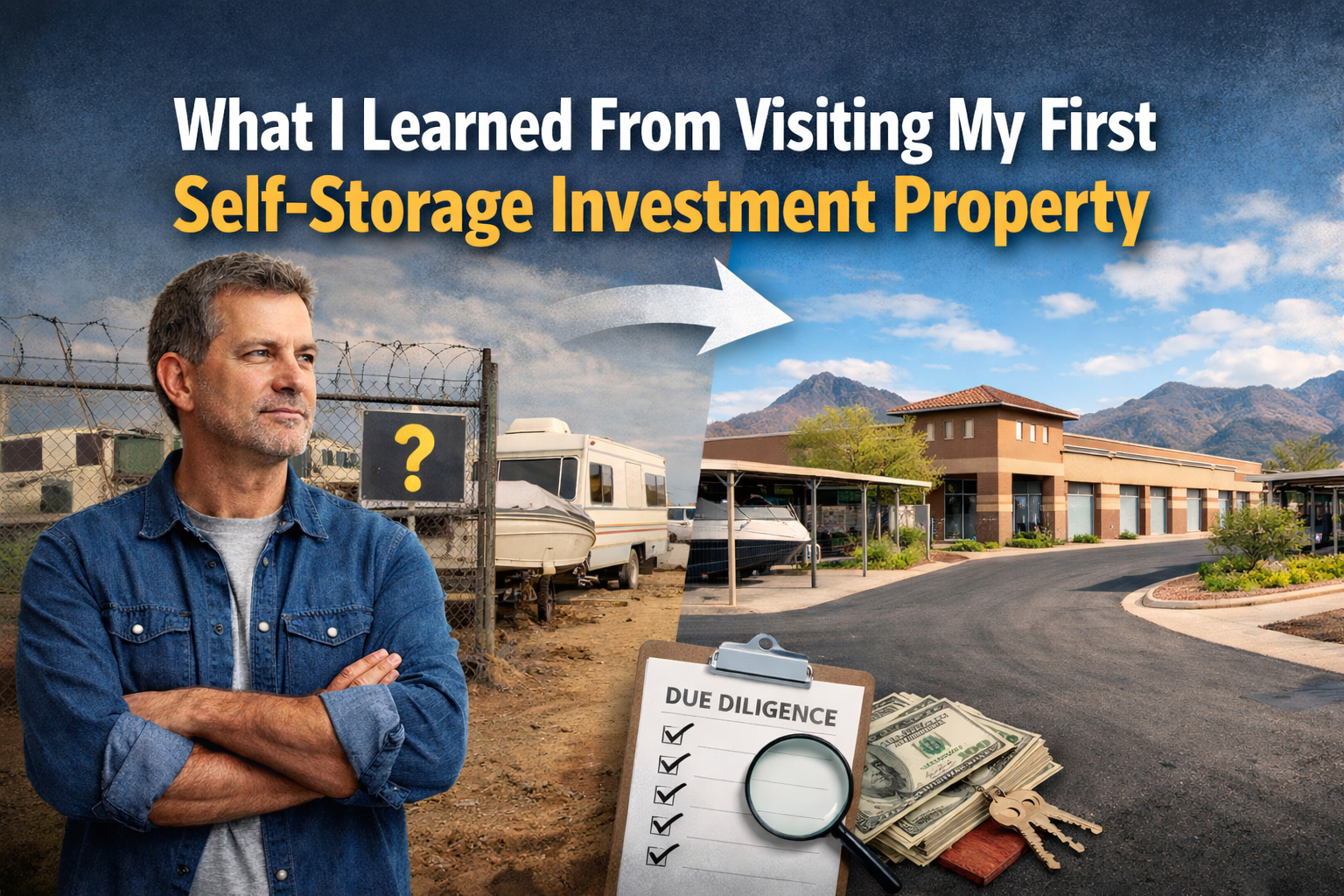
After two years of preparing to invest in commercial real estate, I finally toured my first potential self-storage investment property—and it didn’t turn out the way my wife and I expected. While the experience was disappointing at first, it delivered valuable lessons that will shape how we evaluate future opportunities.
One of the main reasons I joined Inside Self-Storage nearly two years ago was to immerse myself in the industry. My wife and I have long discussed building a commercial real estate portfolio we could one day pass down to our children, and self-storage stood out as an attractive asset class.I assumed that working in this space would help me learn how to evaluate properties, understand self-storage due diligence and connect with professionals who have been through the process many times before. For nearly two years, I stayed on the sidelines—watching listings come and go, learning from each one—until I finally felt ready to take action.That opportunity came in mid-December, when a broker emailed me about a boat and RV storage facility in Apache Junction, Arizona, just 15 minutes from our home. I had recently learned that vehicle storage is underserved in many parts of the U.S., particularly in Arizona, where traditional self-storage markets are often oversaturated. The opportunity seemed promising, so my wife and I decided to see it in person.
We arrived excited. After years of planning and learning, this felt like the first real step toward our long-term investment goals.
That excitement faded almost immediately.
The property was small, lacked curb appeal and was surrounded by a deteriorating chain-link fence. Inside was a dirt lot packed with RVs, trailers, buses and fifth wheels parked in no discernible order. It looked less like a professional storage facility and more like the aftermath of a crowded outdoor festival.
Still, we walked the property, hoping to uncover hidden potential. A CubeSmart banner hanging on a wall caught my attention, raising an important question: Why would a major self-storage operator sell this property? Experienced companies usually know exactly what they’re holding—and what they’re letting go.
Then came another surprise. My wife went to the on-site office to ask about property access, only to return and tell me no one was inside. A vehicle was parked outside, but after waiting several minutes, no one appeared. With no way to speak to management, we moved on to Plan B.
We drove to a neighboring business with a slightly elevated parking lot to get a better view of the site. Unfortunately, the perspective only confirmed our initial impression: a disorganized dirt lot with little visual appeal.
I tried reframing the visit through a value-add self-storage lens—imagining what improvements could be made—but it was hard to ignore the gap between what we saw and what we had hoped to find. In our minds, an ideal self-storage investment would have clear organization, paved surfaces and professional presentation. This property simply didn’t align.
Before calling it a day, we decided to explore the surrounding area. The neighborhood featured established communities with many RVs parked on residential properties—a strong indicator of demand, particularly given the area’s retiree population.
However, commercial development was limited. Large stretches of undeveloped desert made me wonder if this opportunity was less about storage and more of a long-term land play. While stabilizing the business and waiting for future development could be viable, we weren’t comfortable with an uncertain timeline.
We also counted competitors along the main road. Within three miles, we spotted three other boat and RV storage facilities. Two of them were exactly what we had envisioned: paved, organized, attractive and located in a more developed area. Any customer traveling to the property we visited would pass those facilities first—putting our potential acquisition at a disadvantage and forcing it to compete primarily on price.
Once home, my wife and I reflected on the experience. While we briefly discussed viewing the property as a land investment with storage income attached, the lack of nearby development and long-term uncertainty made us uncomfortable. Ultimately, we decided to walk away.
Just one week later, a broker emailed me about a recently closed self-storage facility with vehicle parking in nearby Gold Canyon, Arizona. The difference was striking. The property had strong curb appeal, Southwest-style architecture, pristine landscaping and a paved lot with clearly marked parking spaces. It was exactly what we had imagined—and confirmed that our expectations weren’t unrealistic.
Most importantly, this experience clarified several key takeaways:
While our first attempt didn’t result in an acquisition, it strengthened our confidence and sharpened our criteria. The right self-storage investment property is out there—and when it appears, we’ll be ready.